Safe Practice for Older Adults
Tai Chi Walking for Seniors: A Safe, Step-by-Step Guide
A gentle, balance-first walking practice designed for older adults. Learn safety basics, indoor options, and short 10–20 minute routines you can do at home.
- Wall or chair support
- Short sessions
- Fall-prevention focus
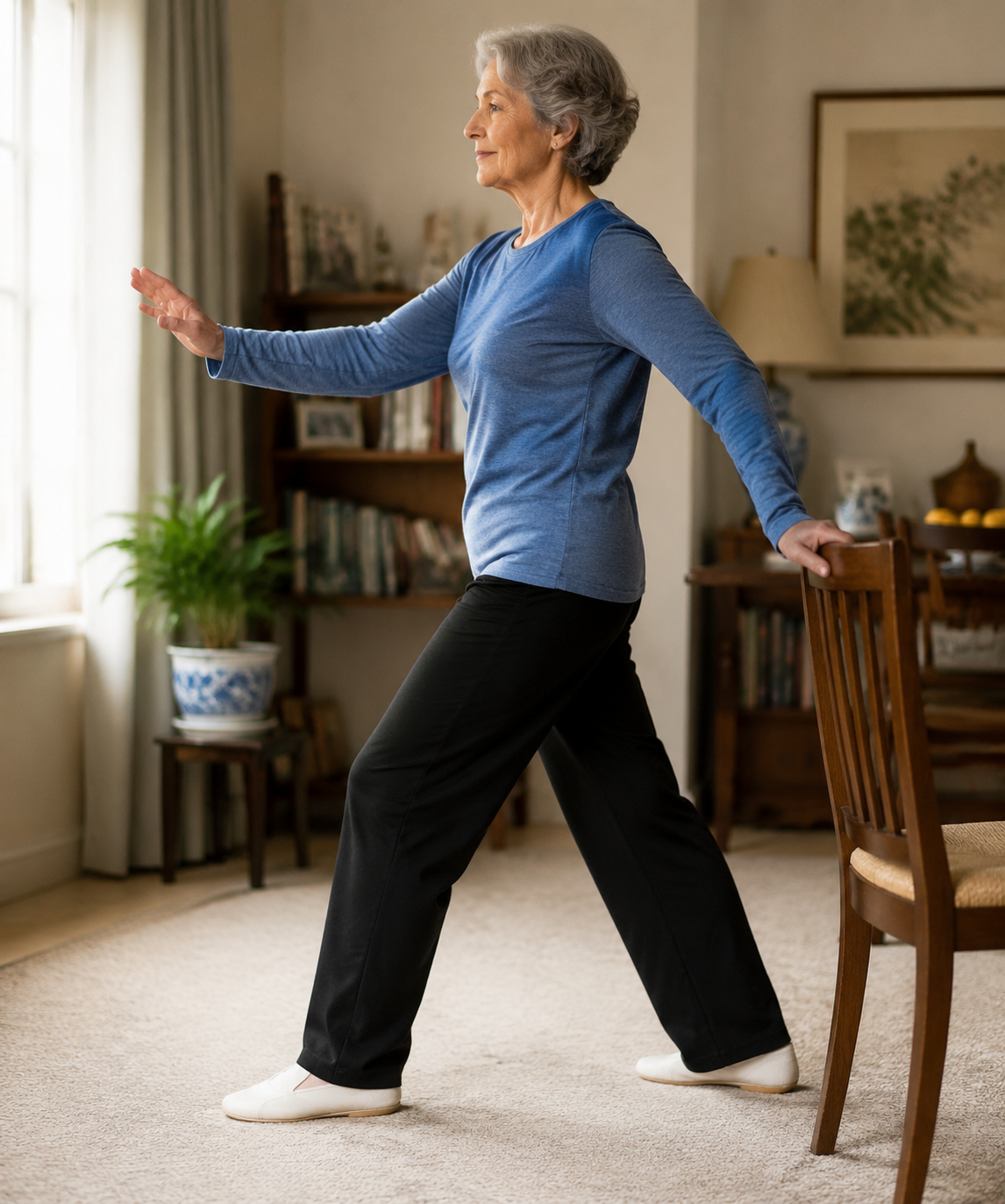
Free Printable Walking Plan for Seniors
Safety checklist + 10/15/20 minute routines. Email download UI is a P0 placeholder.
Why Tai Chi Walking Is Great for Seniors
Tai chi walking for seniors focuses on slow, controlled stepping with full weight transfer. That makes it different from a power walk: the goal is steady balance and confidence, not distance.
Many older adults prefer it because sessions can stay short, happen indoors, and require no special equipment. You can practice beside a wall or sturdy chair while you learn.
New to the method? Start with our generaltai chi walkingguide, then use this page for seniors-focused safety and routines.
Why it helps
Benefits for Older Adults
Supports balance training
Complete weight shifts train the same skills used on stairs and uneven sidewalks—without needing a long outdoor route.
Low joint impact
Soft knees and short steps reduce pounding compared with brisk walking, which many seniors with knee or hip sensitivity appreciate.
Works indoors
A hallway or living room is enough for tai chi indoor walking. Weather, traffic, and uneven pavement are no longer blockers.
Easy to progress
Begin with 5–10 minutes and add time only when your footing feels secure. Consistency beats intensity.
Research Context (Fall Prevention)
A large randomized trial found a tai chi program reduced falls among older adults compared with stretching (Li et al., JAMA Internal Medicine, 2018). Fall prevention remains a key reason clinicians recommend tai chi for seniors.
Source: JAMA Internal Medicine, 2018 (Li et al.)The CDC STEADI initiative lists evidence-based fall prevention approaches that include tai chi programs for older adults.
Source: CDC STEADI / fall prevention resourcesPublished trials typically study structured tai chi classes, not viral “walking-only” clips. Use this guide as gentle practice education, not a medical treatment plan.
Source: NCCIH — Tai Chi: What You Need To Know
Safety Tips for Seniors
- Ask your doctor before starting if you have dizziness, recent surgery, severe osteoporosis, or a history of falls.
- Practice next to a wall, countertop, or sturdy chair you can hold if needed.
- Wear flat, supportive shoes or grippy socks—avoid slippery socks on hard floors.
- Clear clutter, cords, and throw rugs from your walking path.
- Move slower than feels natural. If you tip or hold your breath, shorten the step.
- Stop immediately if you feel chest pain, severe dizziness, or unusual shortness of breath.
Consider waiting or modifying if…
- Your clinician has restricted weight-bearing or balance training
- You feel unsafe standing without assistance and have no caregiver support
- You are acutely ill, febrile, or recovering from a fall without medical clearance
Step-by-Step Tai Chi Walking (Senior-Friendly)
Shorter steps, optional wall support, and slower turns—built for confidence.
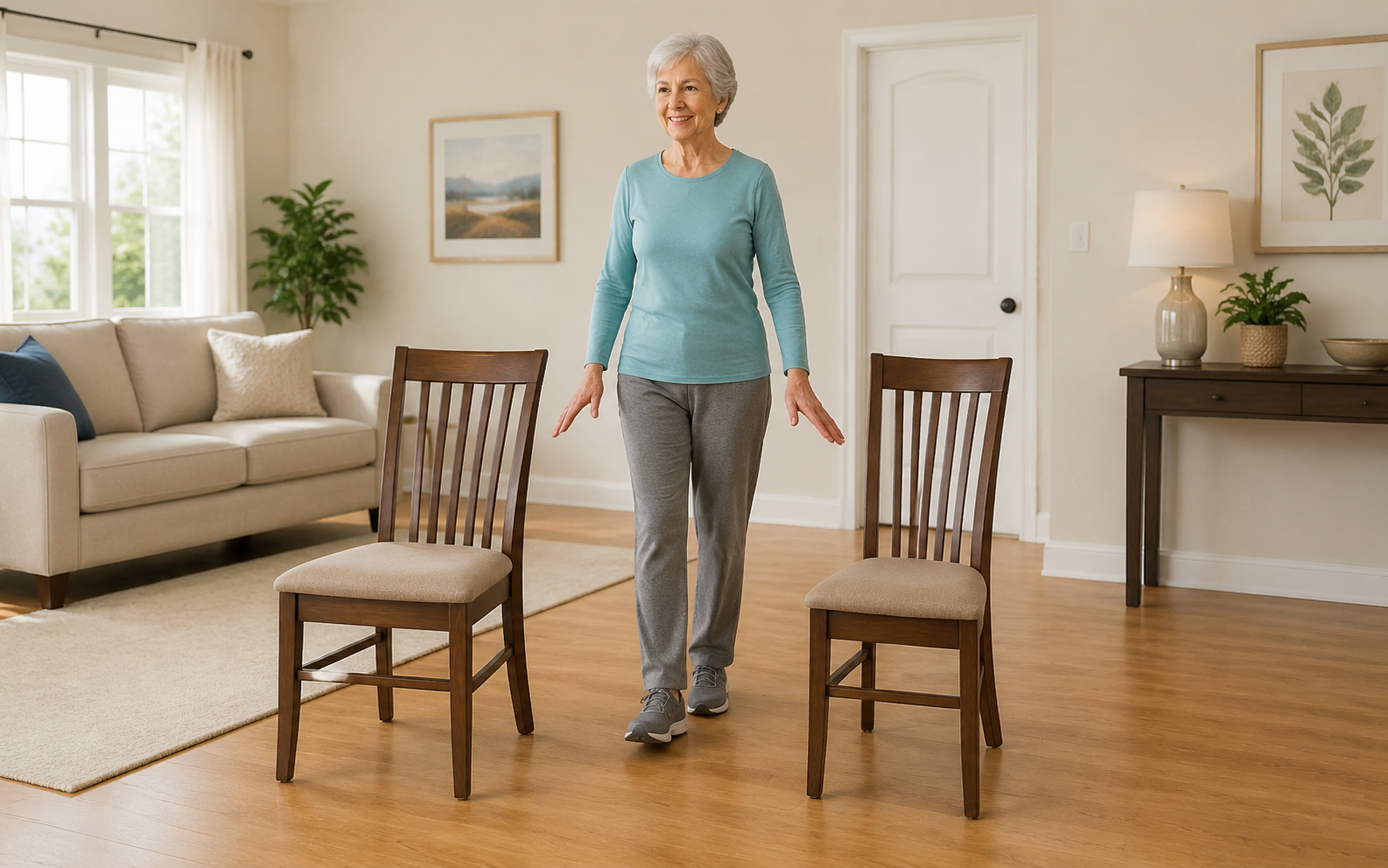
- 1
Set up a safe lane
Mark a straight path of 6–10 steps. Place a chair at the start if you want a rest stop. Stand tall with soft knees and breathe slowly for 30 seconds before moving.
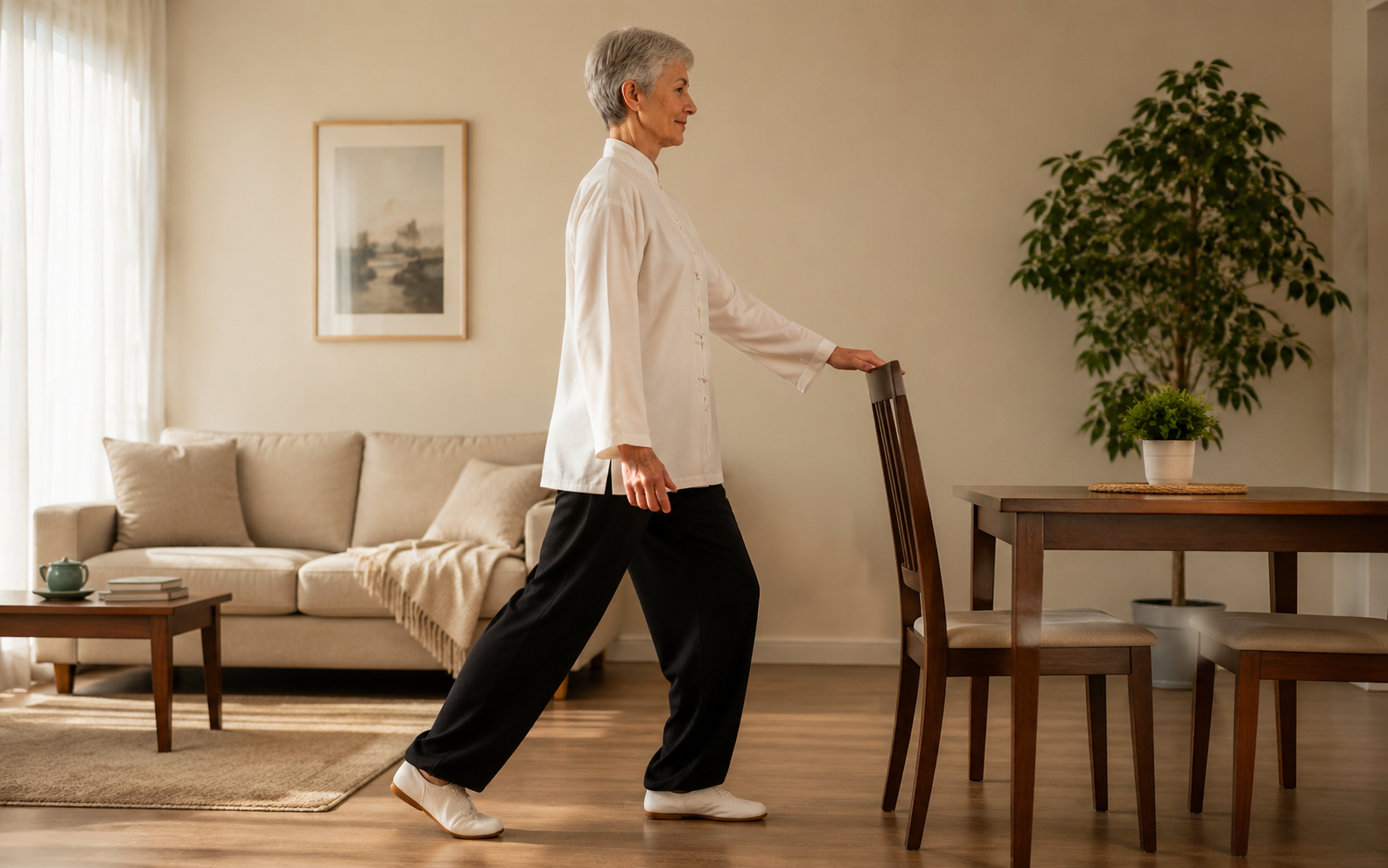
- 2
Hold support if needed
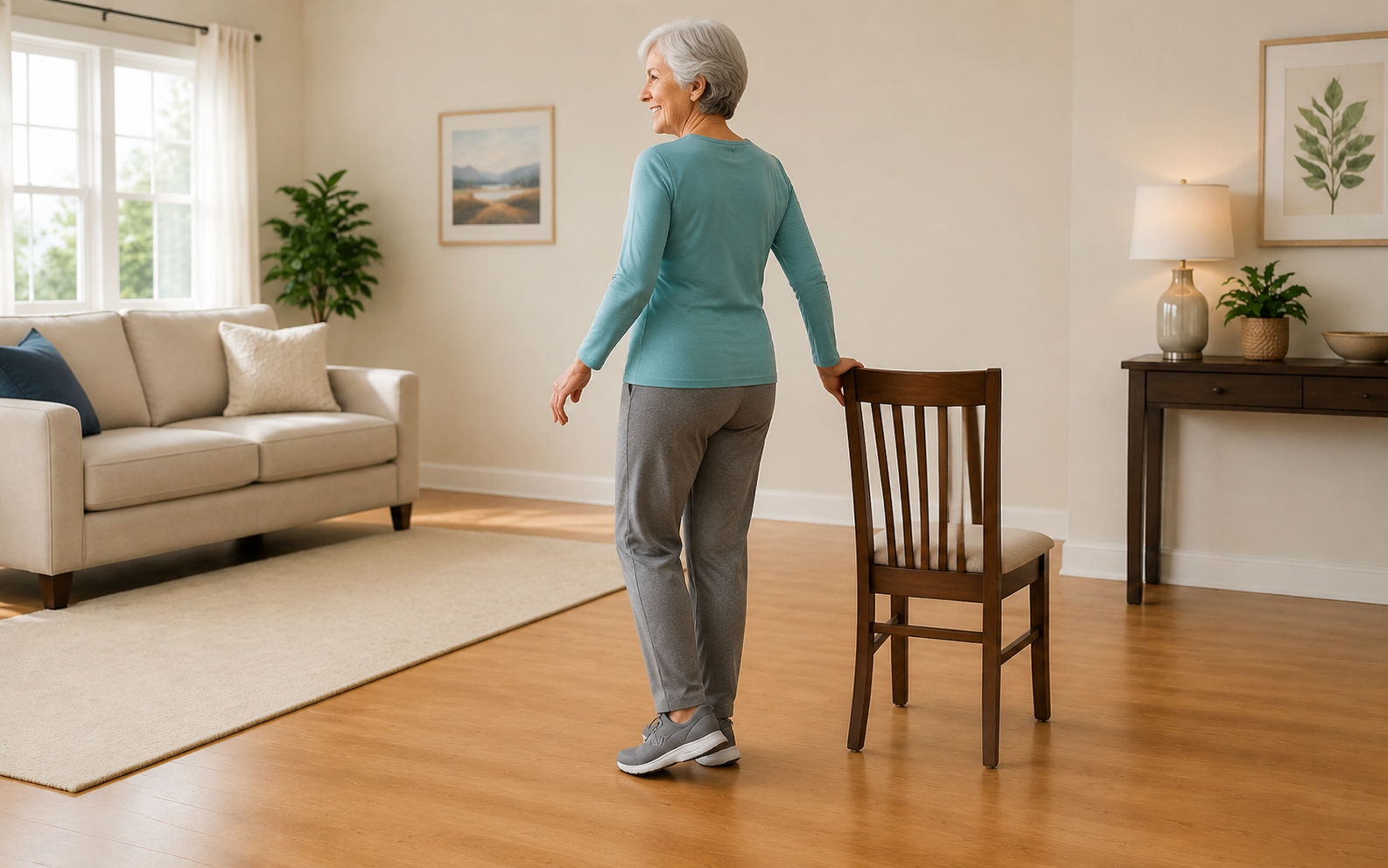
Lightly touch a wall or chair back with one hand while learning. The goal is security, not leaning all your weight onto the support.
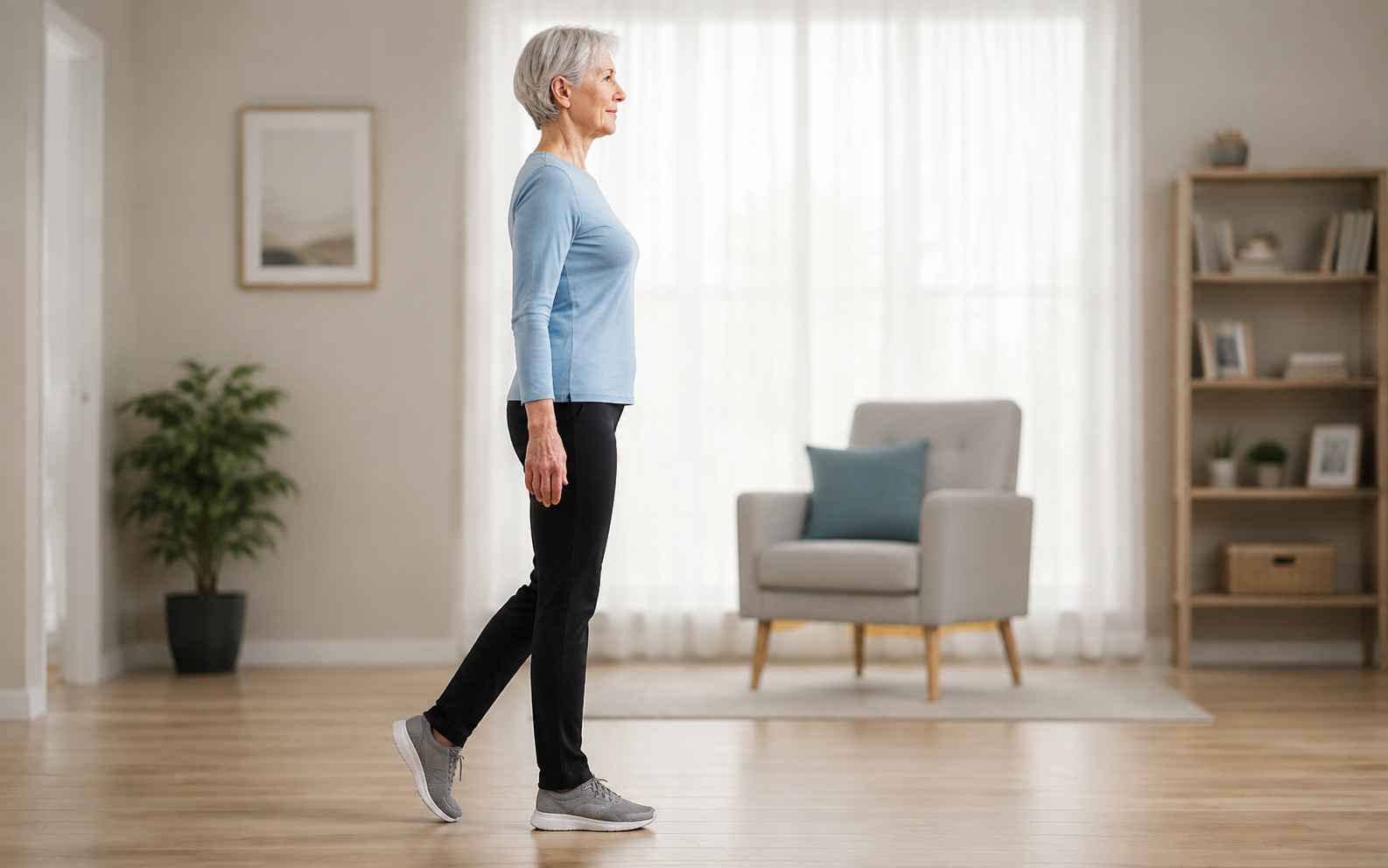
- 3
Shift weight fully to one leg
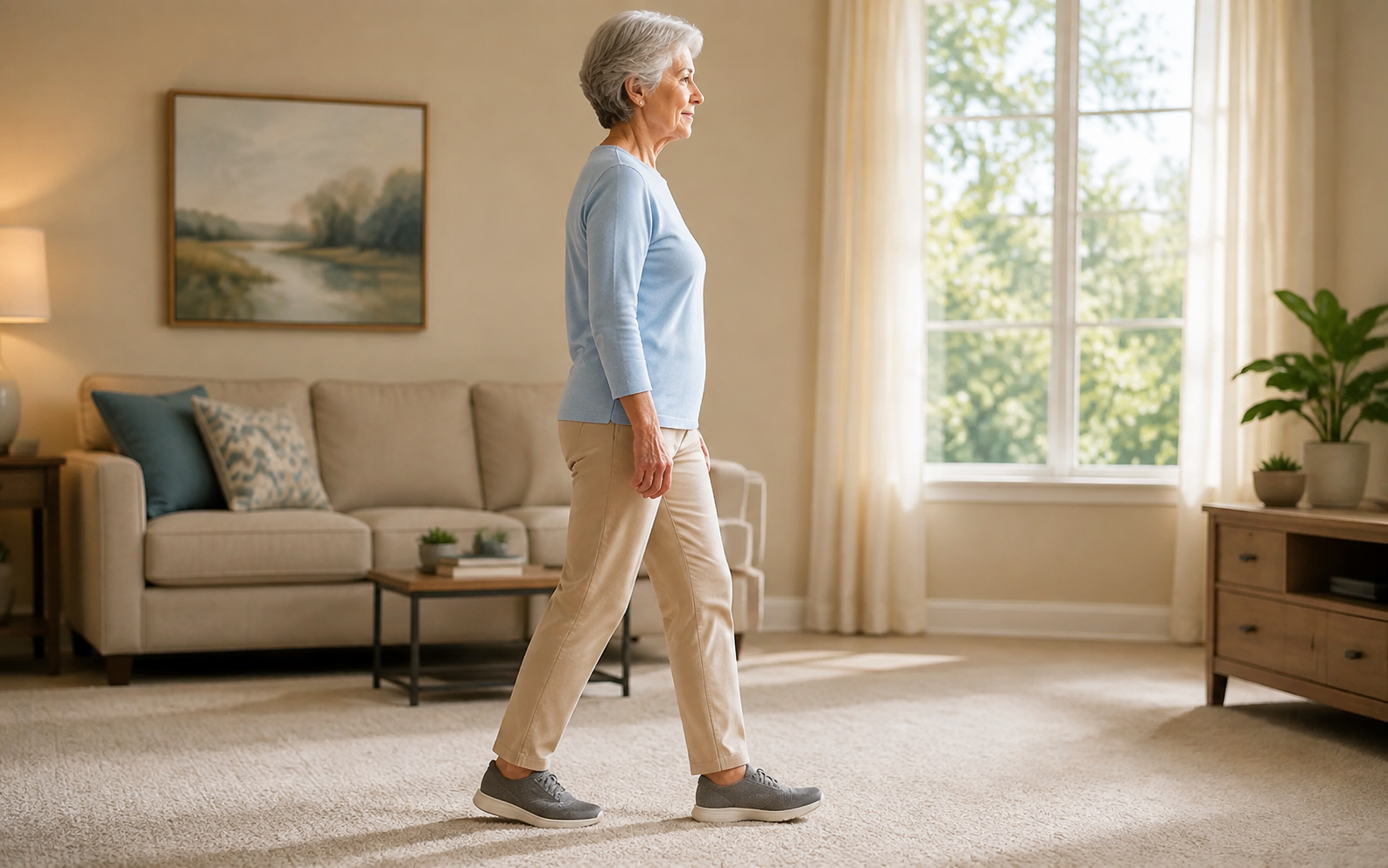
Pour weight into the left foot until the right foot feels light. Pause. Seniors often rush this step—take an extra second.
- 4
Take a short, quiet step
Step only as far as you can place the foot softly. Shorter steps are safer than long strides when balance is limited.
- 5
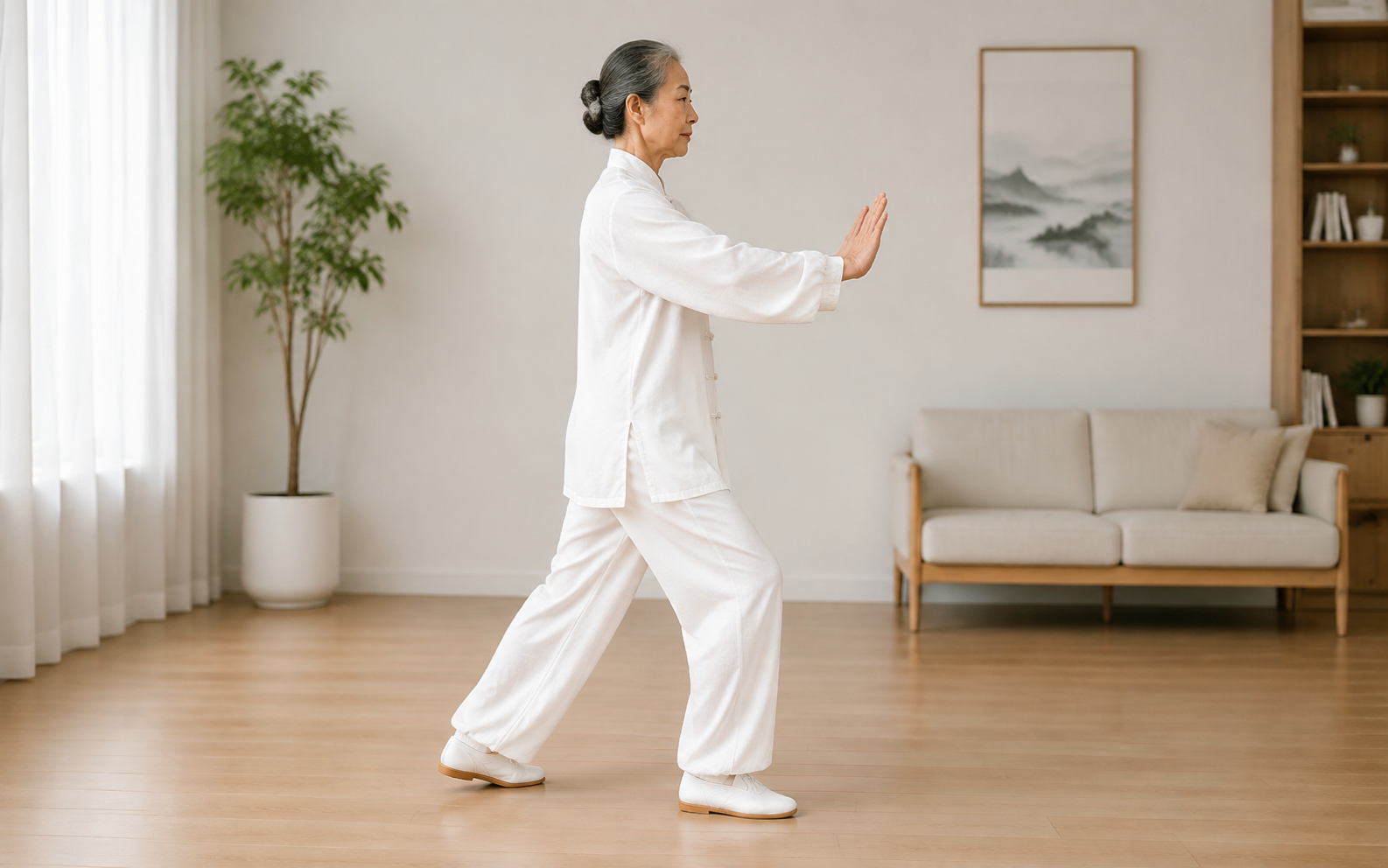
Transfer and empty the back foot
Shift onto the front foot, then peel the back foot free. Keep the head level and eyes soft—looking straight down can increase unsteadiness.
- 6
Turn with small steps
At the end of your path, stop and turn using several small steps in place. Avoid spinning on one foot.
Choose a length
10 / 15 / 20 Minute Routines
Pick the shortest option that still feels steady. Progress only when balance feels reliable.
10 min
Starter
2 min posture + 6 min short steps with wall support + 2 min stillness.
15 min
Steady
3 min warm-up shifts + 10 min hallway walking + 2 min breathing finish.
20 min
Full session
5 min warm-up + 12 min continuous slow walking + 3 min cool-down stillness.
Tai Chi Indoor Walking
Indoor practice removes weather and uneven pavement from the equation. A clear hallway is often ideal fortai chi indoor walking—the same mindful steps, safer conditions.
- Use a hallway with even lighting and no throw rugs.
- Open a door at each end so you can reverse direction without tight pivots.
- Practice after meals only if you feel steady—some people prefer mid-morning sessions.
- Keep a phone nearby, but do not look at it while stepping.
Want the complete beginner tutorial?
Read the fulltai chi walkingguide for a longer step-by-step walkthrough, then return here for seniors safety checklists and timed routines.
FAQ
Frequently Asked Questions
Is tai chi walking safe for seniors?+
For many older adults with medical clearance, yes—especially when practiced slowly on a flat surface with support nearby. Start with short sessions and progress gradually. This is not medical advice; ask your clinician if you have fall risk or chronic conditions.
What is tai chi indoor walking?+
Indoor tai chi walking uses the same slow stepping method inside a hallway or room. It is ideal when outdoor paths are icy, hot, crowded, or uneven.
How often should seniors practice?+
A practical target is 10–15 minutes, most days of the week, as long as you feel stable afterward. Rest days are fine. Quality of balance matters more than long duration.
Should I sit if standing feels unsafe?+
If standing is unsafe, do not force walking drills. Consider seated mobility work with a physical therapist, and use a stable chair for support during any standing practice.
Can tai chi walking help with fall prevention?+
Structured tai chi programs have evidence for reducing falls in older adults. A home walking drill may support balance skills, but it is not a replacement for clinician-recommended fall prevention programs.
Where can I learn the full beginner method?+
See our complete tai chi walking guide for a longer step-by-step tutorial, then return here for seniors-focused safety and routines.
Free plan
Get the Free Seniors Walking Plan
Enter your email to unlock the safety checklist and timed routines. Download starts immediately.
We respect your privacy. Your download starts right after a valid email.